
Counting manuscripts is easy, reading them is not
The issue
The Gyan Bharatam Mission, announced in the Union Budget 2025-26, is the Ministry of Culture's programme to survey, digitise, catalogue and conserve India's manuscripts, and to build a National Digital Repository. Rs 491.66 crore has been sanctioned for 2025 to 2031. It follows the National Mission for Manuscripts, set up in 2003.
The National Manuscript Survey began in March 2026 across all States and Union Territories. According to the Minister's written reply in the Lok Sabha on 3 August 2026, more than 1.19 crore manuscripts have been reported. Over 8 lakh are digitised across the country, and more than 4.40 lakh are available on the Gyan Bharatam portal for public viewing. Three institutions in Bihar have joined the mission: Nava Nalanda Mahavihar in Nalanda, the Khuda Bakhsh Oriental Public Library in Patna and Shri Bodh Gaya Math.
Our view
The survey is worth doing, and its first result is already useful: India now has a rough count of what it holds, and where. But the figures also show the size of the gap. Fewer than one manuscript in fourteen has been digitised, and a scanned page helps only someone who can read it.
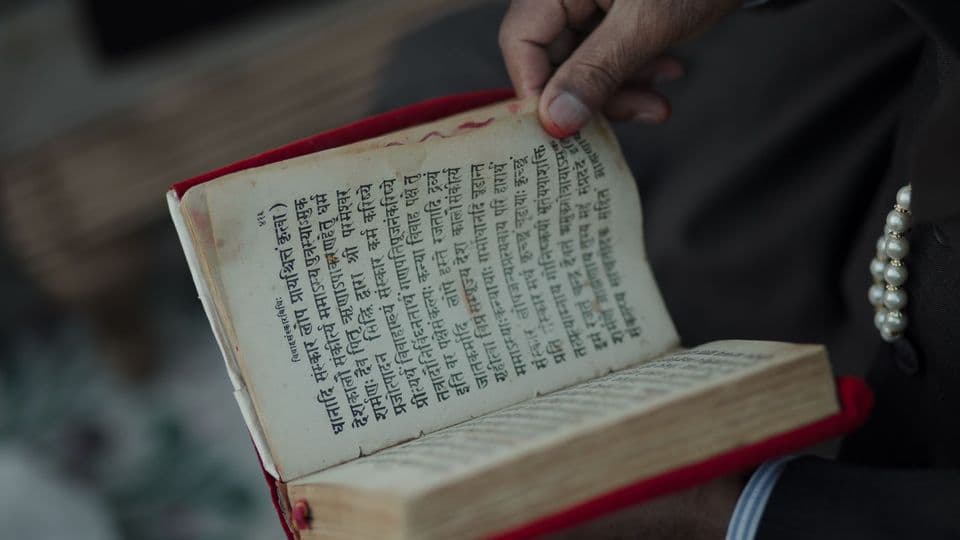
That is the harder problem. Many of these texts are in scripts or old forms of language that few people now read: Sharada, Grantha, Modi, and in Bihar, Kaithi, once the everyday script of land and court records. The mission should fund posts and fellowships in manuscriptology at universities, and pay scholars to catalogue and edit, since a catalogue with author, subject and date is what turns a pile of images into a source. Machine reading of old Indian scripts will help, but its output has to be checked by trained readers, and those readers have to be trained first.
Bihar has a direct stake. Khuda Bakhsh holds one of the country's major collections of Arabic and Persian manuscripts, and Nalanda and Bodh Gaya link the State to Buddhist learning across Asia. A Bihar programme that trains young scholars in these collections would serve both research and the State's heritage economy.
The other side
- Manuscripts decay every monsoon, so digitising first and reading later is a reasonable order of work.
- Many holdings are private or held by religious institutions, and custodians may resist anything that looks like loss of control. The mission's promise to respect custodians' rights has to be kept.
- Rs 491.66 crore over six years is modest for a collection this large, so money spent on scholars competes with money spent on conservation.
Using it in Mains
This fits GS Paper 1 (Indian culture: literature, preservation of heritage) and the Essay paper. For BPSC, use it in the history and culture of Bihar.
Q. "India's manuscript heritage needs readers more than scanners." Discuss with reference to the Gyan Bharatam Mission.
- Survey, digitisation and cataloguing as separate stages.
- The gap: 1.19 crore reported, over 8 lakh digitised.
- Scholars of old scripts as the scarce resource.
- Bihar's collections: Khuda Bakhsh, Nalanda, Bodh Gaya, Kaithi records.
- Keywords: Indian knowledge systems, National Digital Repository, custodians' rights, manuscriptology.
Sources: PIB, Gyan Bharatam Mission and Preservation of Manuscript Heritage, 3 August 2026; Ministry of Culture, launch of the National Manuscript Survey
Want help planning your preparation?
Book a free call and a counsellor will ring you, in Hindi or English.